


A Guide to Indian Handcrafted Sarees: Fabrics, Weaves & Textile Traditions

Handcrafted sarees carry generations of Indian textile artistry through weaving, dyeing, embroidery and hand printing traditions that continue to evolve across different regions of the country. Beyond fashion, handcrafted sarees reflect cultural techniques, artisan skills and thoughtful craftsmanship shaped over decades through handloom and textile practices.
Today, handcrafted sarees are being embraced not only for festive occasions and weddings, but also for contemporary everyday dressing, office wear, meaningful gifting and timeless personal style. From breathable cotton drapes to elegant silk weaves and naturally dyed hand block prints, Indian sarees offer remarkable diversity in texture, craftsmanship and design language.
Understanding Handcrafted Sarees
Handcrafted sarees are created using artisan-led techniques such as hand weaving, hand block printing, embroidery, resist dyeing and traditional textile processes. Unlike mass-produced machine-made fabrics, handcrafted sarees often reflect slight variations in weave, motifs, print placement and texture that make each piece unique.
Many Indian textile traditions continue to be practiced through skilled artisan communities working with heritage techniques that preserve regional craftsmanship while adapting to modern lifestyles and contemporary design preferences.
Ajrakh Sarees: Hand Block Printing with Natural Dyes
Ajrakh sarees are known for their intricate geometric patterns, rich natural tones and layered hand block printing process traditionally practiced using natural and vegetable dyes. The craft involves multiple stages of resist printing, dyeing and washing that create depth and character within the fabric.
Contemporary Ajrakh sarees are now explored across fabrics such as modal silk, dola silk, Chanderi silk cotton, linen blends and artisanal drapes suited for festive wear, office wear and elegant everyday styling.
Fusion interpretations combining Ajrakh with Bandhani, Shibori or zari detailing have also become increasingly popular in handcrafted textile collections.

Jamdani Sarees: The Elegance of Handwoven Motifs
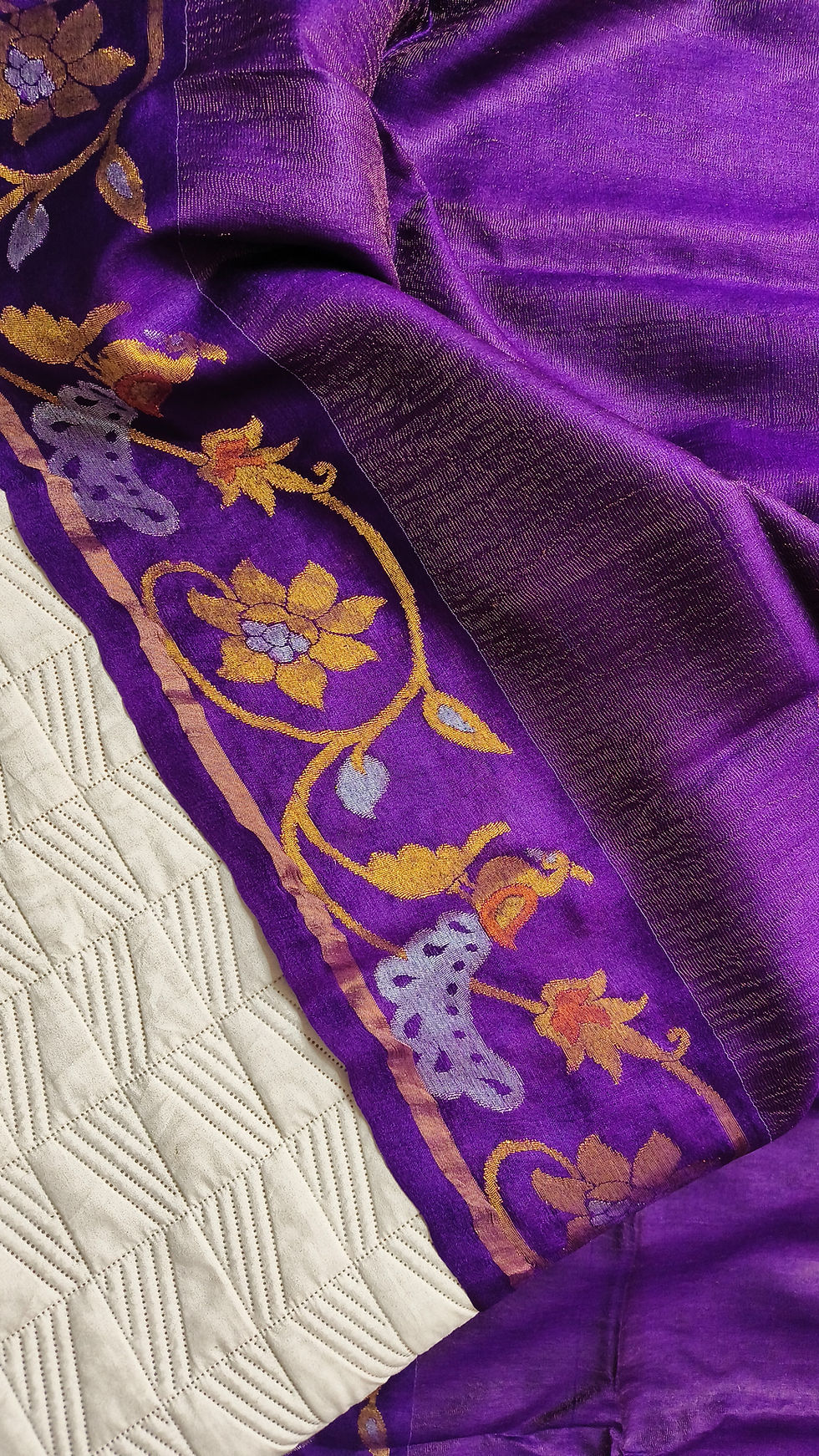
Jamdani weaving is celebrated for its delicate woven motifs created directly into the fabric through labor-intensive handloom techniques. Traditionally associated with airy textures and intricate craftsmanship, Jamdani sarees are appreciated for their understated elegance and breathable comfort.
Modern Jamdani sarees are explored across muslin silk, linen, tussar silk, cotton and artisanal blended fabrics, making them suitable for both minimal contemporary styling and occasion wear. Their lightweight drape and woven detailing make them especially loved for summer dressing and elegant festive wardrobes.
Bandhani and Shibori: Traditional Resist Dyeing Techniques
Bandhani and Shibori reflect distinct resist dyeing traditions that create beautiful patterns through tying, folding and dyeing processes. Bandhani sarees are often associated with vibrant festive aesthetics and detailed handcrafted tying techniques, while Shibori creates softer fluid patterns through stitched, folded or compressed dyeing methods.
These textile traditions continue to inspire modern handcrafted sarees that balance artisanal heritage with wearable contemporary styling.

Maheshwari and Chanderi Sarees: Lightweight Handwoven Elegance
Maheshwari and Chanderi sarees are admired for their lightweight textures, subtle sheen and elegant weaving traditions. Chanderi silk cotton sarees are especially valued for their breathable comfort and graceful drape, while Maheshwari sarees are appreciated for their understated sophistication suitable for everyday elegance as well as festive occasions.
These sarees often combine traditional weaving techniques with contemporary colour palettes and versatile styling possibilities.

Choosing Sarees by Fabric and Occasion
The beauty of handcrafted sarees lies in their versatility across seasons, occasions and personal styling preferences.
Lightweight cotton, linen and muslin silk sarees are often preferred for summer dressing and everyday elegance.
Modal silk and dola silk sarees offer fluid drapes suitable for festive wear and statement styling.
Chanderi silk cotton and Maheshwari sarees balance comfort with sophistication for office wear, celebrations and gifting.
Kota Doria sarees are especially appreciated for their lightweight open weave structure and breathable comfort during Indian summers. Known for their airy texture and delicate craftsmanship, handwoven Kota Doria sarees are often chosen for everyday elegance, office wear and warm-weather festive dressing.
Handcrafted embroidered sarees, Ajrakh prints and woven textiles continue to remain timeless choices for weddings, festive gatherings and meaningful wardrobe collections.

Why Handcrafted Sarees Continue to Matter
In an increasingly fast-paced fashion landscape, handcrafted sarees continue to represent thoughtful craftsmanship, slower production techniques and textile traditions rooted in artisan skill. Every handcrafted textile carries details that reflect human involvement — from handwoven textures and layered printing to subtle irregularities that become part of the fabric’s individuality.
Choosing handcrafted sarees also encourages appreciation for Indian textile traditions, breathable natural fabrics and timeless styles that move beyond short-lived fashion cycles.
At Dhupchaanv, our collections bring together handcrafted sarees, artisanal weaves and traditional textile techniques curated for modern everyday dressing, weddings, festive celebrations and elegant gifting while celebrating the richness of Indian craftsmanship.
